Check what search engines can actually reach
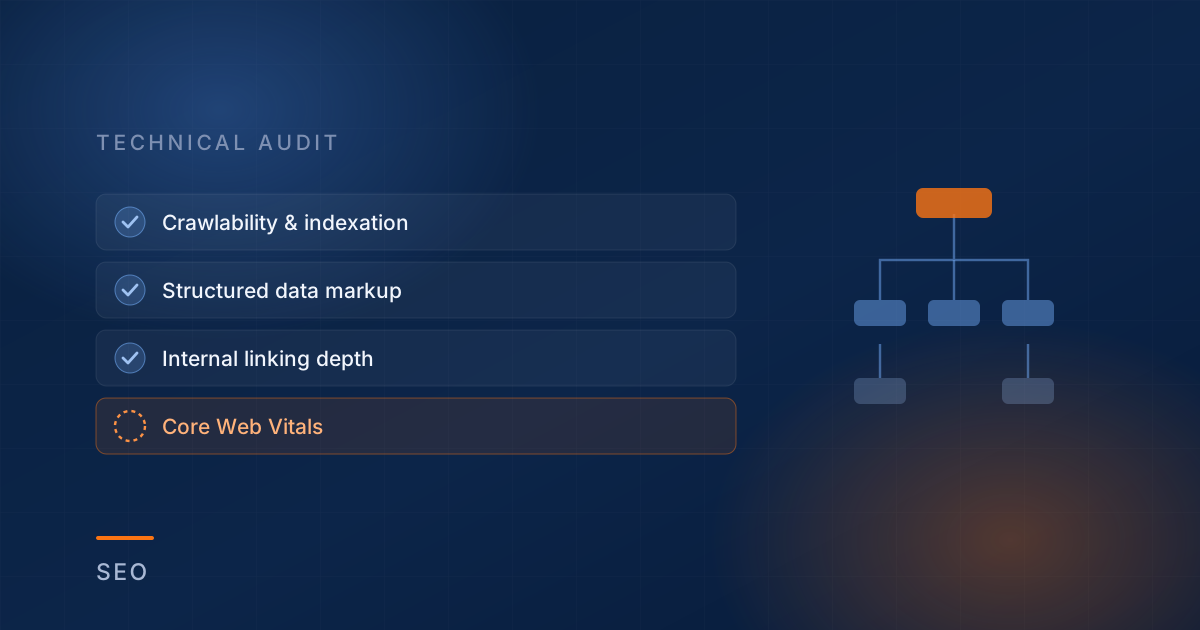
Before writing another article, look at what a crawler sees. Robots directives, noindex tags inherited from a staging environment, redirect chains and orphan pages routinely hold back sites that already have good content.
Compare your sitemap against the indexed page count in Search Console. A large gap is a diagnosis, not a statistic.
- One version of the site resolves canonically — https, no www/non-www duplication, no trailing-slash duplicates.
- No staging noindex tags carried into production.
- Sitemap contains only canonical, indexable, status-200 URLs.
- No unintentional redirect chains in the primary navigation.
Speed is a qualification issue, not a vanity metric
Mobile users on mid-range devices and variable networks are the majority of traffic for most Indian businesses. Large hero images, unused JavaScript and third-party tags do the damage.
Set explicit performance budgets during a build: a target Largest Contentful Paint, a JavaScript bundle ceiling, and image weight limits per template. Then verify on a real device, not a lab score alone.
Structured data is the cheapest win available
Organisation, LocalBusiness, Service, FAQ and Article markup help search engines understand and represent your pages correctly. It is a few hours of work with a durable benefit.
Validate every markup type you ship, and keep it synchronised with visible page content. Markup that describes something the page does not contain is a risk, not an optimisation.
Internal linking decides how authority flows
Service pages should be reachable within a few clicks of the homepage, and supporting content should link to them with descriptive anchor text. Most sites do the reverse — every blog post links to other blog posts while the money pages sit isolated.
When you publish a new supporting article, decide which commercial page it should pass relevance to, and link there in the first screen of content.
Local relevance for Pune and Maharashtra
Local visibility depends on consistency: the same name, address and phone across your site, profiles and directories; a service-area structure that matches where you actually deliver; and content that reflects locality-level demand where it exists.
Write location pages only when there is genuine local intent to serve. Thin pages repeated across ten cities with the text swapped out add nothing and dilute quality signals.
Key takeaways
- Fix crawl and indexation before producing more content.
- Set performance budgets and verify on real devices.
- Ship validated structured data aligned to page content.
- Link supporting content to commercial pages deliberately.
Written by the Nextagrow Editorial team in Pune, Maharashtra. Guidance is general — apply it with reference to your own market, systems and constraints.